Deep Cleaning Services goes beyond everyday dusting, vacuuming, and mopping. It focuses on built-up grease, soap scum, stubborn dirt, and overlooked areas that regular cleaning may not fully address. Whether you live in a condo, townhouse, or detached home, understanding what deep cleaning includes helps you plan a more thorough clean and avoid unexpected service charges. A typical house deep cleaning covers detailed kitchen and bathroom cleaning, baseboards, door frames, floors, furniture surfaces, and other accessible areas that need extra attention. However, not every professional cleaning company includes the same tasks. This guide explains what you can generally expect, what may cost extra, how long cleaning takes, and when a deeper clean makes sense for your home.
What Is Deep Cleaning in Housekeeping?
Deep cleaning is a detailed house cleaning process that targets accumulated dirt, grime, and neglected surfaces beyond routine household maintenance. While regular cleaning helps keep frequently used areas tidy, a deep clean gives additional attention to places where buildup develops over time. For example, wiping your stovetop after cooking is routine cleaning. Removing grease from the surrounding backsplash, cleaning cabinet handles, and detailing accessible edges requires additional effort. Similarly, wiping a bathroom sink is different from scrubbing mineral deposits around its fixtures or removing stubborn soap scum from shower surfaces.
A top-to-bottom cleaning approach can help you work through a home systematically. It may include dusting accessible higher surfaces before cleaning furniture, baseboards, and floors. This reduces the chance of spreading settled dust onto surfaces you have already cleaned. Deep cleaning does not mean stripping every room or cleaning every hidden space. The exact work depends on your home’s condition, accessible surfaces, cleaning methods, and agreed checklist. A useful deep clean addresses the areas that genuinely need more attention without damaging delicate materials.
What Does a Deep Cleaning Include? A Room-by-Room Breakdown
A thorough residential deep cleaning usually focuses on kitchens, bathrooms, bedrooms, living areas, and frequently overlooked details throughout the home. Each room has different surfaces, cleaning challenges, and areas where dirt accumulates. The following breakdown describes common professional deep cleaning activities, rather than a universal list of tasks included in every company’s package.
Kitchen Deep Cleaning
Your kitchen often requires detailed attention because cooking leaves grease, food residue, and buildup on frequently used surfaces. Kitchen deep cleaning generally includes wiping countertops, cleaning sinks and taps, removing grease from accessible stovetop surfaces, and detailing backsplashes. Cabinet doors, handles, appliance exteriors, and nearby surfaces may also receive closer attention. Areas around knobs, edges, and handles can collect residues that quick daily wiping misses. Some cleaning packages include microwave interiors and additional degreasing. However, cleaning inside full-sized ovens, refrigerators, freezers, and cabinets may require a separate request. Confirm these tasks before assuming they are covered.
Bathroom Deep Cleaning
Bathroom deep cleaning focuses on soap scum, mineral deposits, grime, and buildup around fixtures. It commonly involves more detailed cleaning of sinks, toilets, tubs, showers, taps, countertops, and accessible tile surfaces. Grout lines and shower-door tracks may need additional care because residue can collect in narrow spaces. Appropriate tools and products depend on whether the surface is ceramic tile, natural stone, glass, or another material. A deep clean may improve the appearance of surface buildup, but it is not a substitute for specialized mould assessment or remediation. Extensive or recurring mould problems should be evaluated separately.
Bedroom Deep Cleaning
Bedroom deep cleaning goes beyond making the bed and quickly vacuuming visible floor areas. It may involve detailed dust removal from bedside tables, dressers, shelves, door frames, accessible light fixtures, window sills, and baseboards. Cleaning beneath and around reachable furniture can help remove dust that collects outside the usual cleaning path. Vacuuming suitable floor surfaces and accessible corners is another common priority. Mattress treatment, upholstery shampooing, specialized stain removal, and moving heavy furniture should not automatically be assumed to be part of standard deep cleaning.
Living Room and Common Area Deep Cleaning
Living rooms and shared areas can accumulate dust around furniture, decorations, fixtures, and frequently touched surfaces. A detailed clean may include wiping accessible shelving, cleaning door frames, dusting baseboards, and vacuuming floors or rugs. Light switches, door handles, stair railings, and reachable corners may also require attention. Where suitable, cleaners may vacuum around sofa cushions or beneath accessible furniture to remove accumulated dirt. Delicate electronics, specialty fabrics, oversized furniture, and difficult-to-reach fixtures may need different handling or separate arrangements.
Often-Overlooked Areas That Need Extra Attention
Some of the most noticeable differences between regular and deep cleaning involve details that are easy to miss during everyday maintenance. These may include door edges, window sills, baseboards, reachable vent grilles, stair railings, and dusty corners. Hand-wiping baseboards, cleaning marked door frames, and removing buildup around accessible fixtures can make a room feel more thoroughly maintained. However, a complete deep cleaning checklist should account for surface condition, access, and cleaning safety. Cleaning behind a movable chair is not the same as pulling out a heavy refrigerator or dismantling a fixture. Understanding these differences helps you discuss your priorities with a cleaning provider and choose a service that meets your home’s actual needs.
Deep Cleaning vs Regular Cleaning — What Is the Difference?
Regular cleaning maintains your home through recurring tasks such as dusting, vacuuming, mopping, wiping counters, and cleaning frequently used bathrooms. Deep cleaning builds on that maintenance by addressing additional buildup and more detailed areas that need periodic attention.
| Cleaning Factor | Regular Cleaning | Deep Cleaning |
| Main purpose | Maintain everyday cleanliness | Address accumulated dirt and overlooked areas |
| Surface attention | Commonly used and visible surfaces | Additional edges, trim, and buildup-prone surfaces |
| Kitchen cleaning | Routine counters, sinks, and appliance exteriors | More detailed degreasing and cleaning around fixtures |
| Bathroom cleaning | Routine toilet, sink, and shower cleaning | More intensive attention to soap scum and mineral deposits |
| Baseboards and door frames | Basic dusting or routine wiping | More detailed wiping or washing where appropriate |
| Time and effort | Usually less extensive for the same property | Often requires more detailed work |
| Scheduling | Weekly, biweekly, or another regular schedule | Periodic or when the home needs additional attention |
The distinction is about the scope and level of detail, not a universal checklist that every company follows. For ongoing household maintenance, standard cleaning services may be sufficient. A deeper clean can be useful when dirt has accumulated, certain surfaces have been neglected, or you want additional attention before returning to a routine schedule.
Cleaning Tasks That May Be Included, Excluded, or Charged Separately
One of the most important questions to ask before booking a house deep cleaning service is exactly what the cleaner will do. Some companies include detailed appliance and cabinet cleaning, while others offer these tasks separately. Certain specialized jobs fall outside ordinary residential cleaning altogether.
Before booking, clarify these common areas of uncertainty:
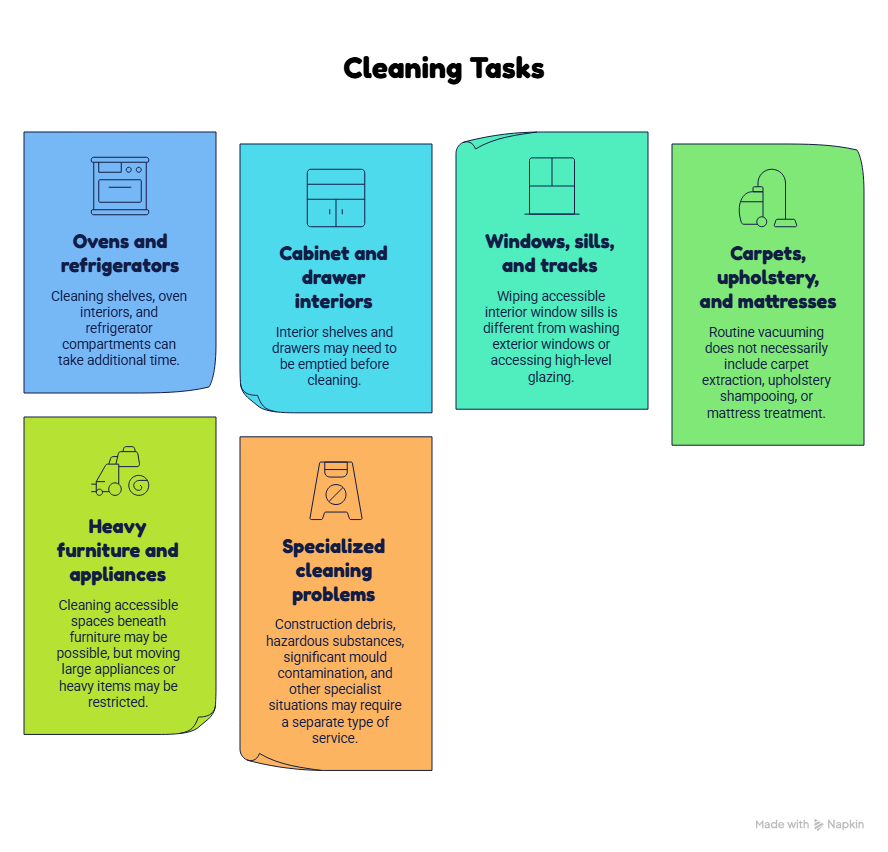
- Inside ovens and refrigerators: Cleaning shelves, oven interiors, and refrigerator compartments can take additional time. Some providers treat these as optional tasks or include them only in particular packages.
- Cabinet and drawer interiors: Interior shelves and drawers may need to be emptied before cleaning. Confirm whether the service covers them.
- Windows, sills, and tracks: Wiping accessible interior window sills is different from washing exterior windows or accessing high-level glazing.
- Carpets, upholstery, and mattresses: Routine vacuuming does not necessarily include carpet extraction, upholstery shampooing, or mattress treatment.
- Heavy furniture and appliances: Cleaning accessible spaces beneath furniture may be possible, but moving large appliances or heavy items may be restricted.
- Specialized cleaning problems: Construction debris, hazardous substances, significant mould contamination, and other specialist situations may require a separate type of service.
Toronto Home Cleaners publishes a detailed cleaning checklist that distinguishes Premium Deep Cleaning from Move-In/Move-Out Cleaning. For example, its published checklist lists oven interiors under Move-In/Move-Out Cleaning rather than explicitly listing them under Premium Deep Cleaning. Checking the actual service scope before booking helps you avoid confusion about included tasks, additional charges, and preparation requirements.
How Long Does It Take to Deep Clean a House?
There is no single cleaning duration that applies to every property. The time needed depends on the home’s size, number of rooms and bathrooms, surface conditions, accessibility, and the tasks included. A small condo with routine upkeep may require less work than a larger detached home with several bathrooms and substantial kitchen grease buildup. Properties that have not received detailed cleaning for a long period may also need additional attention. The number of cleaners matters. For instance, a two-person team working for three hours provides six combined cleaner-hours, even though the appointment lasts only three hours. That distinction matters when comparing hourly estimates. Before scheduling, explain your property size, cleaning priorities, and any areas with heavy buildup. A provider can then assess the requested scope and give a more meaningful time estimate than a generic household average.
How Much Does Professional Deep Cleaning Cost in Toronto?
The cost of professional deep cleaning in Toronto depends on your property and the work required. A condo with one bathroom will not necessarily have the same cleaning requirements as a multi-storey house with several bathrooms and a heavily used kitchen. Published Toronto pricing guides also show that providers use different pricing structures, which means a quoted amount is meaningful only when you understand the included work.
Important cost factors include:
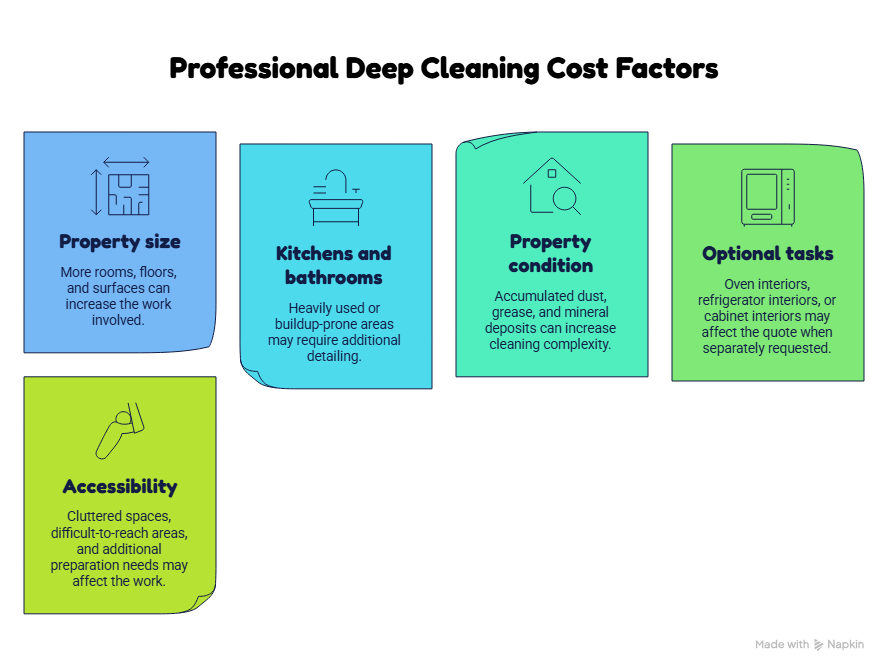
- Property size and layout: More rooms, floors, and surfaces can increase the work involved.
- Kitchens and bathrooms: Heavily used or buildup-prone areas may require additional detailing.
- Current property condition: Accumulated dust, grease, and mineral deposits can increase cleaning complexity.
- Optional tasks: Oven interiors, refrigerator interiors, or cabinet interiors may affect the quote when separately requested.
- Accessibility: Cluttered spaces, difficult-to-reach areas, and additional preparation needs may affect the work.
For context, a published September 2026 Toronto pricing guide from Cleaning Hive lists a starting price of CAD $259 before HST for a one-bedroom, one-bathroom condo deep clean. This is an example of one provider’s advertised starting price, not an established Toronto-wide average or Toronto Home Cleaners’ price. For an accurate quote, explain the property’s size, condition, and preferred cleaning tasks. You can review deep cleaning services in Toronto and discuss the specific scope you need.
How Often Should You Deep Clean Your House?
How frequently you should deep clean depends on how your household uses its space. A home with several occupants, pets, frequent cooking, or high daily activity may develop visible buildup sooner than a lightly used property. Regular maintenance makes a difference. If you consistently clean kitchen surfaces, bathrooms, floors, and frequently touched areas, you may not need the same level of intensive cleaning as a property where those tasks have been neglected.
Seasonal changes can also affect your priorities. During Ontario winters, entryways and floors may need extra attention because moisture and outdoor debris can be tracked indoors. A seasonal cleaning review can help identify neglected surfaces without requiring an arbitrary whole-house schedule. Rather than following a universal three-month or six-month rule, inspect your home for stubborn buildup, difficult-to-maintain areas, and tasks that regular cleaning no longer addresses effectively. Use those observations to decide when a deeper clean is worthwhile.
How to Prepare Your Home for Professional Deep Cleaning
You do not need to complete a full cleaning before professional cleaners arrive. However, a little preparation can make it easier to access priority areas, protect personal belongings, and confirm what you expect from the visit.
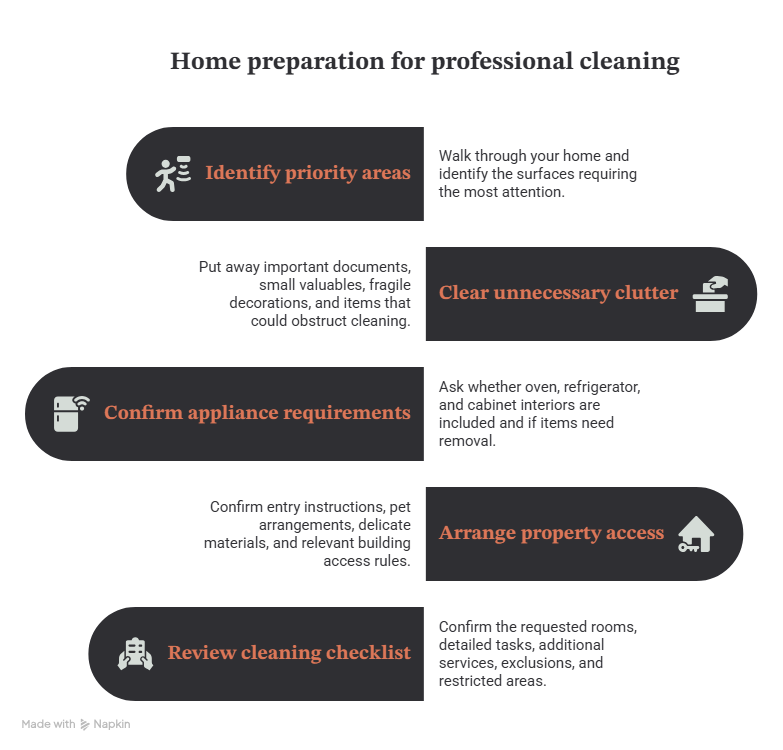
- Identify your highest-priority areas. Walk through your home and identify the surfaces requiring the most attention. For example, you may want extra bathroom detailing, grease removal around the stovetop, or more thorough baseboard cleaning.
- Clear unnecessary clutter from accessible surfaces. Put away important documents, small valuables, fragile decorations, and items that could obstruct cleaning. You do not need to scrub the surfaces yourself.
- Confirm appliance and cabinet cleaning requirements. Ask whether oven, refrigerator, and cabinet interiors are included. If interior cleaning is arranged, check whether food, dishes, and personal items need to be removed beforehand.
- Arrange property access and explain special concerns. Confirm entry instructions, pet arrangements, delicate materials, and any relevant condo-building access rules. Point out damaged or sensitive surfaces that may require special care.
- Review the agreed cleaning checklist. Confirm the requested rooms, detailed tasks, additional services, exclusions, and any areas that should not be touched.
Clear communication helps the cleaning team understand your expectations and reduces misunderstandings about the work included.
When Is a Professional Deep Cleaning Service Worth Considering?
Professional deep cleaning may be worth considering when your home needs more detailed attention than you can reasonably provide through regular maintenance. You may have accumulated grime in bathrooms, difficult kitchen buildup, or limited time to clean neglected surfaces thoroughly. A one-time deep cleaning can also help before special occasions, after periods of reduced household maintenance, or when you want to establish a cleaner starting point for your regular routine.
However, not every home needs professional deep cleaning. If routine cleaning adequately addresses your household’s condition, maintaining that schedule may be enough. The right service also depends on the situation. Preparing an empty rental property for a new occupant may call for move-in or move-out cleaning. Likewise, fine dust and residue following renovations may require specialized post-construction cleaning, rather than an ordinary residential deep clean. Consider the property’s condition, your available time, and the tasks requiring attention before choosing a service.
Frequently Asked Questions About House Deep Cleaning
What does a typical deep clean consist of?
A typical home deep clean involves detailed cleaning of kitchens, bathrooms, bedrooms, living areas, and accessible overlooked surfaces. Tasks may include kitchen degreasing, removing bathroom buildup, detailing baseboards and door frames, dusting fixtures, and cleaning floors. Exact inclusions vary by provider.
What is included in a professional deep cleaning service?
Professional deep cleaning commonly includes routine household cleaning plus additional detailing around accessible trim, fixtures, appliances, and buildup-prone surfaces. The precise tasks depend on the cleaning company’s published checklist and the scope agreed upon before service.
What is not included in a deep cleaning service?
Possible exclusions include interior appliance cleaning, carpet extraction, upholstery shampooing, exterior window washing, heavy furniture moving, construction debris removal, and specialist mould remediation. Each provider has its own exclusions, so confirm the service checklist before booking.
Does deep cleaning include the inside of ovens, fridges, and cabinets?
Not automatically. Some cleaning companies include these tasks, while others charge separately or offer them through a different package. Toronto Home Cleaners’ published checklist places oven, fridge, and cabinet interior tasks under Move-In/Move-Out Cleaning. Confirm their availability in your selected service.
What is the difference between regular cleaning and deep cleaning?
Regular cleaning focuses on maintaining frequently used surfaces through recurring tasks. Deep cleaning involves more detailed attention to accumulated grime, difficult areas, trim, fixtures, and other surfaces that may receive less attention during routine visits.
How much does a professional deep cleaning cost in Toronto?
The price varies by property size, condition, number of bathrooms, and requested tasks. Local providers publish different rates and starting prices, so there is no single quote suitable for every home. Contact your chosen cleaner with specific property details for accurate pricing.
How long does it take to deep clean a house?
Cleaning time depends on the number of rooms, surface conditions, required tasks, property access, and team size. A smaller, well-maintained home may need less time than a larger property with extensive buildup. Ask for an estimate based on your actual cleaning checklist.
How often should you deep clean your house?
Deep cleaning frequency depends on household activity, pets, cooking habits, routine maintenance, and how quickly dirt accumulates. Inspect your home periodically and arrange deeper cleaning when regular maintenance no longer addresses accumulated grime or neglected areas.
How should I prepare my home for a professional deep cleaning?
Identify priority areas, secure valuables, clear unnecessary clutter, arrange access, and discuss delicate surfaces or pets. Confirm whether appliance and cabinet interiors are included, and review the cleaning checklist before the appointment.
Is professional deep cleaning worth it?
Professional deep cleaning may be worthwhile when your home has substantial buildup, you have limited time, or you want detailed attention beyond regular maintenance. Whether it offers good value depends on your property’s condition, the agreed cleaning tasks, and your priorities.
Final Thoughts — Understanding What Your Home Deep Cleaning Should Include
Deep cleaning is more than a longer version of regular housekeeping. It focuses on detailed cleaning of kitchens, bathrooms, floors, fixtures, baseboards, and other accessible areas where dirt and grime can accumulate. The most important step is understanding what your chosen cleaning service actually includes. A clear checklist helps you distinguish routine cleaning from deeper detailing, identify optional tasks, and plan around your home’s specific needs. If your property needs extra attention, Toronto Home Cleaners offers residential deep cleaning services across its GTA service areas. Explore the company’s professional deep cleaning services or call +1 437-475-0034 to discuss your cleaning priorities and confirm the available service scope.