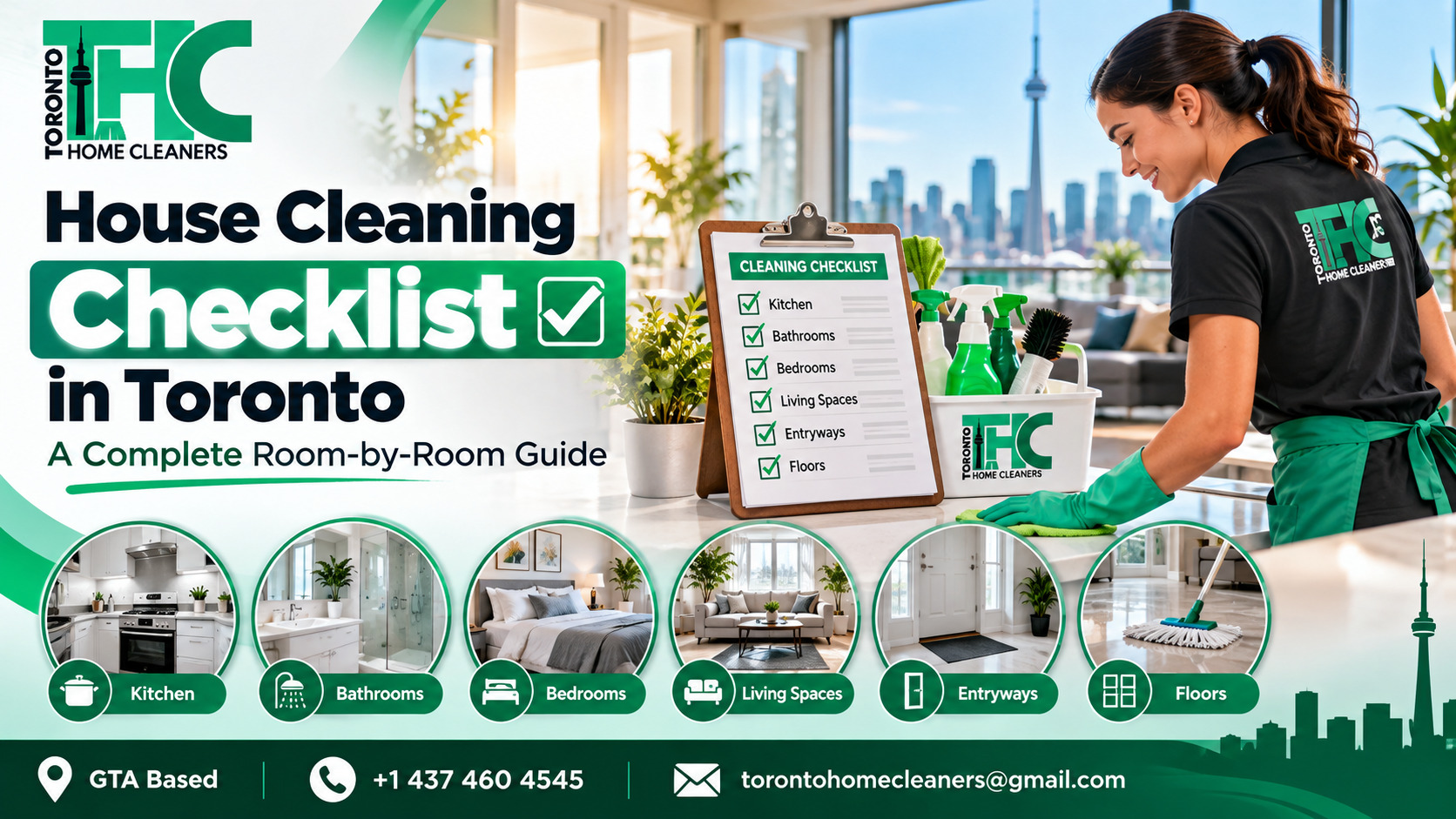
A house cleaning checklist in Toronto helps you organize daily chores, maintain frequently used rooms, and decide when your home needs more detailed cleaning. A practical checklist covers kitchens, bathrooms, bedrooms, living spaces, entryways, and floors, with tasks divided into daily, weekly, monthly, and seasonal routines.
Whether you live in a downtown Toronto condo, a rented apartment, or a detached house in the Greater Toronto Area (GTA), your cleaning priorities should reflect how you actually use your home. This guide provides a room-by-room checklist, a flexible cleaning schedule, a practical cleaning order, and guidance on which tasks you can handle yourself or arrange through a professional service.
How to Use a House Cleaning Checklist for Your Toronto Home
The most useful house cleaning checklist in Toronto is one you can follow consistently without turning every cleaning session into a major project. Rather than trying to clean your entire property at once, divide the work into manageable activities according to room usage, household size, and available time. Begin by identifying the areas that need frequent attention. For example, a family with young children may need to clean kitchen floors and shared bathrooms more often, while someone living alone may have fewer daily cleaning demands.
Next, separate tasks into routine maintenance and occasional intensive cleaning. Wiping counters, managing dishes, and cleaning everyday spills are regular responsibilities. Removing heavy grease, dealing with neglected surfaces, and treating specialized materials may require additional time or professional assistance. A checklist should also account for your home’s materials. Hardwood, laminate, natural stone, stainless steel, and delicate furnishings may require different cleaning products and methods. Review your routine periodically. If a room stays relatively clean, you may be able to adjust its cleaning schedule. If dirt accumulates quickly, give it more frequent attention.
Complete Room-by-Room House Cleaning Checklist
Organizing household chores by room helps you identify what needs attention and reduces the chance of missing frequently used areas. The following detailed house cleaning checklist is primarily intended for homeowners managing their own cleaning routines. Professional cleaning packages may have different inclusions, which are explained later in this guide.
Kitchen Cleaning Checklist
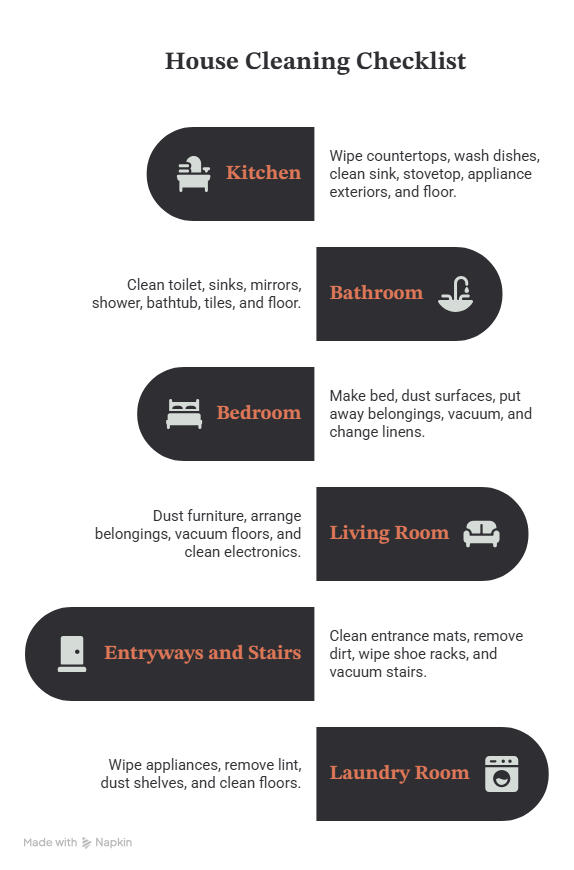
Your kitchen needs consistent cleaning because food preparation, cooking, and daily use leave crumbs, splashes, grease, and fingerprints on accessible surfaces. Keeping these areas clean helps make everyday food preparation and household maintenance more manageable. Focus on surfaces you use regularly, and choose cleaning products suitable for the material.
- Wipe countertops and food-preparation surfaces.
- Wash dishes or load the dishwasher.
- Clean the sink, taps, and accessible backsplash.
- Wipe the stovetop after it has cooled.
- Clean appliance exteriors and cabinet handles.
- Sweep or vacuum the kitchen floor and mop when needed.
Occasionally, inspect the microwave interior, refrigerator shelves, cabinet interiors, and accessible spaces where food residue may collect. Clean these areas according to the appliance or surface manufacturer’s instructions. Avoid assuming that every professional standard cleaning service automatically includes full-sized oven or refrigerator interiors. Those tasks may require separate arrangements.
Bathroom Cleaning Checklist
Bathrooms experience regular moisture, soap residue, water spots, and everyday use. A practical bathroom routine should address toilets, sinks, showers, mirrors, and suitable flooring before dirt becomes difficult to remove. Give additional attention to frequently touched fixtures while using cleaning methods appropriate for the surfaces.
- Clean the toilet bowl, seat, exterior, and accessible surrounding surfaces.
- Wipe sinks, taps, countertops, and vanities.
- Clean mirrors with a suitable product.
- Clean shower walls, doors, and bathtub surfaces.
- Wipe accessible bathroom tiles and fixtures.
- Sweep and mop suitable bathroom floors.
Check the product instructions before using acidic cleaners or descaling solutions. Natural stone, metal finishes, and certain grout materials can be damaged by unsuitable products. If you notice persistent mould growth, moisture intrusion, or damaged sealant, investigate the underlying issue instead of assuming routine scrubbing will resolve it.
Bedroom Cleaning Checklist
Bedroom cleaning is easier to manage when you combine accessible-surface dusting with floor maintenance and light organization. Your cleaning frequency may vary depending on whether you use the bedroom only for sleeping or also for working, studying, and storing belongings.
- Make the bed and straighten bedding.
- Dust bedside tables, dressers, and accessible shelves.
- Put away clothing and personal belongings.
- Vacuum carpets or clean suitable hard flooring.
- Change bed sheets and pillowcases when needed.
- Remove dust from reachable corners and furniture surfaces.
For occasional additional cleaning, inspect accessible areas beneath movable furniture and follow the manufacturer’s care instructions for mattresses and upholstered items. Avoid moving heavy furniture without suitable help, and do not assume every mattress is designed to be flipped.
Living Room and Common Area Checklist
Living rooms, family rooms, and shared spaces often collect dust around furniture, shelves, decorations, and electronic equipment. When several people use the same space, everyday clutter can also build up quickly. A regular cleaning routine should keep the main surfaces accessible and address dirt on carpets, rugs, and floors.
- Dust accessible tables, shelves, and furniture.
- Arrange cushions, blankets, books, and everyday belongings.
- Vacuum suitable carpets, rugs, and reachable floor areas.
- Mop hard floors when appropriate.
- Wipe reachable switches, handles, and other frequently touched surfaces.
- Clean electronics using manufacturer-approved methods.
Take particular care around television screens, electrical outlets, and delicate devices. Do not spray cleaning solutions directly onto sensitive electronic components. If you have specialty furniture, use products appropriate for its upholstery, wood finish, or other materials.
Entryways, Hallways and Stairs
Entryways connect outdoor conditions with your home’s interior. Shoes, bags, pets, and frequent movement can bring moisture and debris onto floors and mats.Keeping these spaces clean is especially useful when rain, snow, or road salt is tracked indoors.
- Vacuum or shake out suitable entrance mats.
- Remove visible dirt and moisture from entryway floors.
- Wipe accessible shoe racks and storage surfaces.
- Vacuum stair runners and reachable corners.
- Clean accessible stair railings and door handles.
- Inspect flooring for tracked-in grit or salt residue.
During Toronto winters, prompt attention to slush and salt residue may help reduce prolonged exposure of floor finishes to moisture and abrasive debris. Follow the floor manufacturer’s cleaning instructions, particularly for wood, laminate, and natural stone.
Laundry Rooms and Utility Spaces
Laundry and utility areas may receive less daily attention than kitchens and bathrooms, but they still benefit from regular housekeeping. These spaces often contain appliances, cleaning supplies, storage shelves, and flooring that can collect ordinary dust or lint.
- Wipe accessible washing machine and dryer exteriors.
- Remove lint from the dryer’s removable screen according to its instructions.
- Dust reachable shelves and storage surfaces.
- Sweep or vacuum accessible flooring.
- Mop suitable hard floors when required.
- Keep everyday belongings clear of appliance ventilation and access areas.
Routine housekeeping should not be confused with technical appliance servicing. Dryer ducts, internal mechanical components, electrical connections, and similar systems may require qualified maintenance.
Daily, Weekly, Monthly and Seasonal House Cleaning Schedule
A room-by-room checklist tells you what to clean, while a cleaning schedule helps you decide when the work needs attention. Your house cleaning checklist in Toronto should reflect how frequently rooms are used, how quickly surfaces become dirty, and which everyday tasks your household already handles.
The following schedule provides a practical starting point.
| Frequency | Suggested Cleaning Tasks | Main Purpose |
| Daily or as needed | Wipe food-contact surfaces, manage dishes, clean spills, and tidy high-use areas | Control everyday mess |
| Weekly or as needed | Clean bathrooms, dust accessible furniture, vacuum and mop suitable floors, and change linens | Maintain commonly used rooms |
| Monthly or periodically | Inspect appliance interiors, clean selected accessible details, and review neglected areas | Address less frequent cleaning requirements |
| Seasonally or when needed | Review entryway buildup, clean suitable window treatments, and plan more detailed cleaning | Adapt to changing conditions |
These intervals are suggestions, not mandatory standards. A household with pets or several occupants may need more frequent floor maintenance, while a lightly used room may require less attention. You can also divide cleaning responsibilities among household members. For instance, one person might handle kitchen surfaces while another manages vacuuming or bathroom cleaning. The goal is to develop a practical system that matches your property’s condition and keeps routine tasks manageable.
How to Clean Your Home in the Right Order
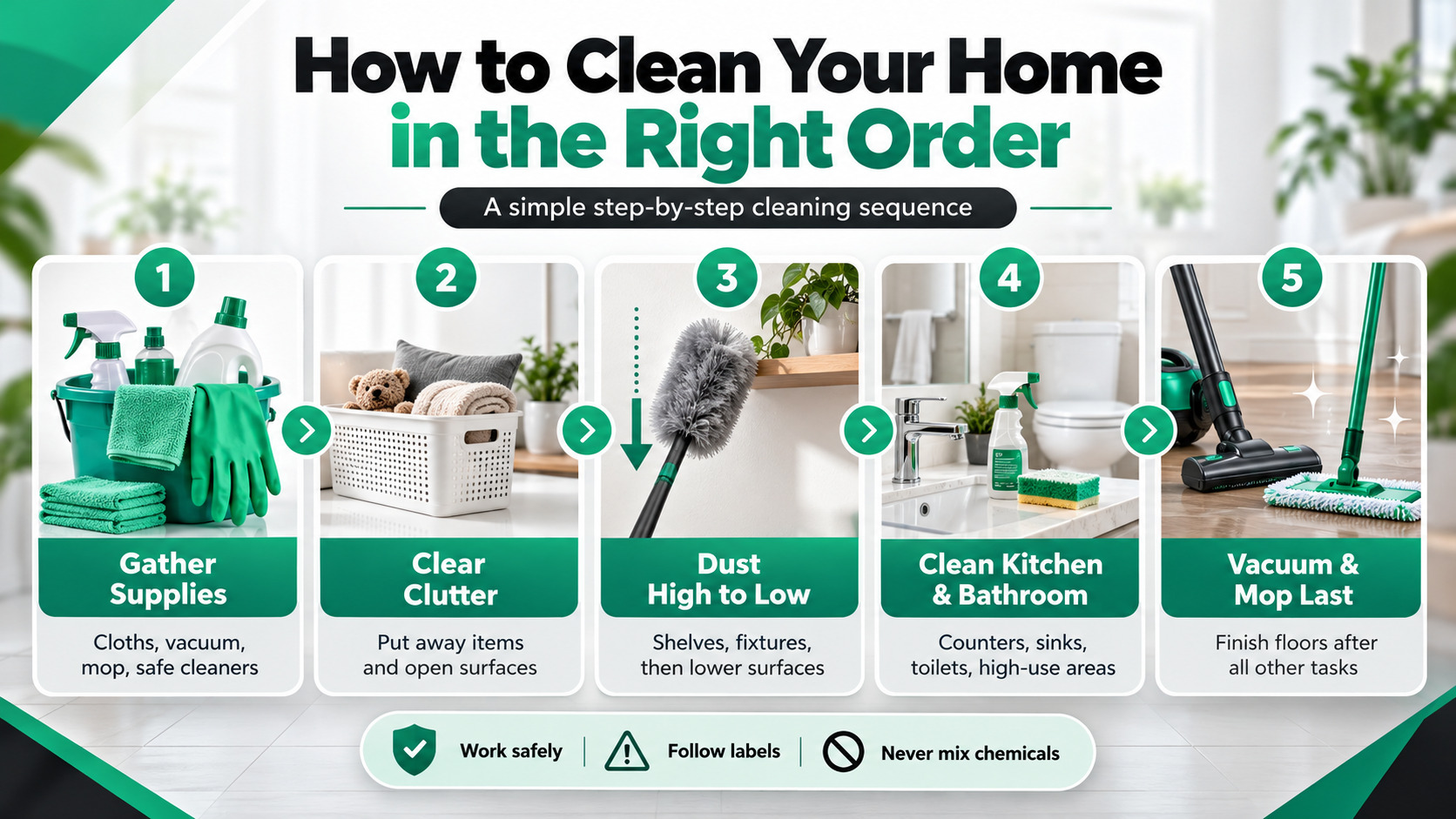
Following a consistent cleaning order can reduce duplicated work and help you avoid dropping dust onto areas you have already cleaned. You do not need complicated equipment or an elaborate schedule. A straightforward process can make routine home maintenance easier.
- Gather supplies and check surface requirements. Prepare suitable microfibre cloths, vacuum equipment, a mop, and cleaning products approved for your home’s materials. Read cleaning product labels and never mix chemicals.
- Clear clutter and prepare accessible areas. Put away clothing, dishes, papers, and objects that obstruct surfaces. Secure fragile items and keep pathways clear before starting.
- Dust accessible higher surfaces first. Begin with reachable shelves, fixtures, and furniture, then work toward lower surfaces. Avoid unsafe ladders, unstable furniture, or difficult-to-reach areas.
- Clean kitchens and bathrooms according to their needs. Address counters, sinks, toilets, and other commonly used fixtures with suitable products. If disinfection is necessary, follow the disinfectant’s label instructions and required contact time.
- Vacuum and mop suitable floors last. Collect remaining debris before cleaning appropriate hard surfaces. Avoid excessive moisture on flooring that is sensitive to water.
You can adapt the sequence to suit your home. A smaller condo may be easier to clean room by room, while a larger property may benefit from completing similar tasks across several rooms. The most effective order is one that lets you work safely, systematically, and without unnecessary repetition.
Standard Cleaning vs Deep Cleaning — Which Checklist Do You Need?
Standard cleaning and deep cleaning both support household upkeep, but they address different levels of dirt and cleaning requirements. A standard cleaning checklist focuses on recurring tasks such as dusting accessible surfaces, vacuuming, mopping, cleaning bathrooms, and maintaining everyday kitchen areas. Deep house cleaning goes further by addressing heavier buildup, neglected surfaces, and tasks requiring more intensive effort. For example, dusting a baseboard during routine cleaning is different from washing heavily marked trim. Similarly, wiping an appliance exterior is different from removing accumulated grease inside an oven.
However, cleaning companies do not all classify tasks in exactly the same way. Toronto Home Cleaners includes accessible baseboard, ceiling fan, and window-sill dusting in its published Standard Cleaning checklist. Its Premium Deep Cleaning checklist adds tasks such as more detailed baseboard washing, door-frame cleaning, vent-grille vacuuming, and intensive kitchen or bathroom attention.
If your home is already in generally good condition, standard cleaning services may suit your maintenance needs. If neglected areas or stubborn buildup require additional attention, review the company’s deep cleaning services before deciding.
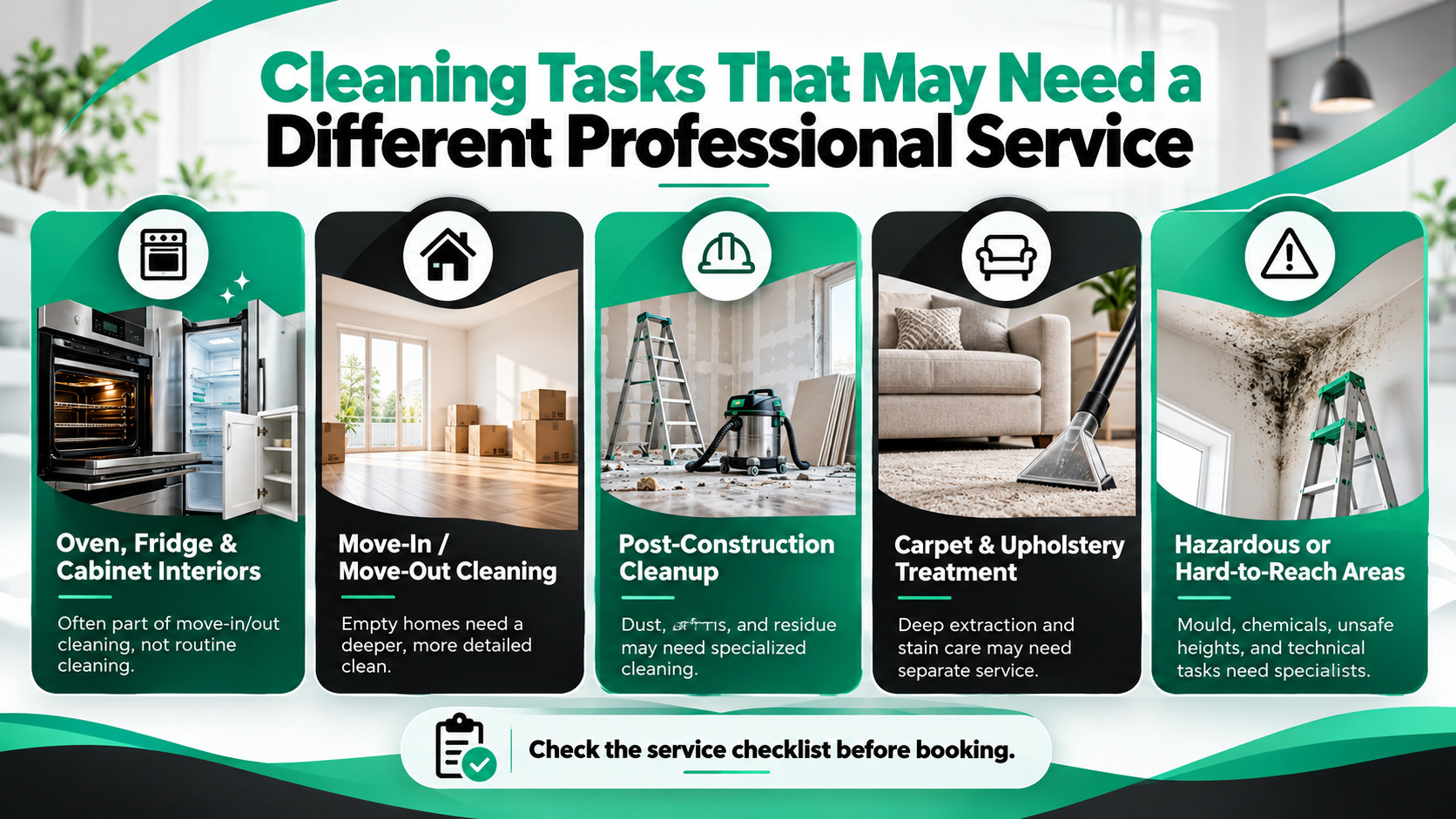
Cleaning Tasks That May Need a Different Professional Service
Your personal cleaning routine can include tasks that a professional cleaning company may not cover during a standard appointment. Understanding this difference can help you choose an appropriate service and avoid unexpected changes to the agreed cleaning scope.
- Oven, refrigerator, and cabinet interiors: Cleaning inside appliances and cabinets can require emptying contents, removing shelves, and addressing concentrated residue. Toronto Home Cleaners lists oven interiors and certain refrigerator and cabinet interior tasks within its Move-In/Move-Out checklist, rather than presenting them as standard inclusions.
- Moving-related property cleaning: Empty homes may require detailed attention to surfaces that are usually hidden by furniture or personal belongings. Move-in and move-out cleaning can have a different scope from routine housekeeping.
- Post-construction cleanup: Renovations can leave fine drywall dust, sawdust, protective films, and construction residue. Appropriate post-construction cleaning may require specialized methods and equipment.
- Carpet and upholstery treatments: Routine vacuuming does not necessarily include professional extraction, stain removal, or specialty fabric treatment.
- Hazardous and difficult-access cleaning: Significant mould contamination, hazardous substances, unsafe heights, and technical appliance work require appropriate specialist assessment or assistance.
Before booking, compare your expectations with the provider’s published checklist. Ask which tasks belong to the selected package and which need separate arrangements.
Toronto Seasonal Cleaning Priorities for Homes and Condos
Toronto’s weather changes throughout the year, and those changes can affect the areas of your home that need attention. Rather than following a completely different cleaning routine every season, adjust your priorities according to outdoor conditions, household activity, and the materials inside your property.
Winter — Slush, Salt and Entryway Floors
Winter footwear can bring snow, slush, moisture, and road salt indoors. Entrance mats, nearby hallways, and frequently used floors may need additional cleaning. Remove loose dirt and use suitable products to address residue. Be careful with water-sensitive flooring and avoid letting moisture sit on vulnerable surfaces.
Spring — Dust and Neglected Indoor Surfaces
Spring can be a useful opportunity to inspect spaces that receive less attention during colder months. Review accessible window sills, blinds, furniture edges, shelving, and corners for accumulated dust. Use appropriate methods for delicate finishes and window treatments.
Summer — Frequently Used Rooms and Outdoor Debris
During summer, outdoor activities, visitors, and frequently opened doors can introduce additional debris into busy household spaces. Focus on entry areas, frequently used living rooms, kitchen surfaces, and floors where everyday mess develops.
Autumn — Preparing for Colder Weather
Autumn is a practical time to review entry mats, clean accessible storage areas, and deal with neglected indoor dust before winter conditions arrive. You may also want to check whether your vacuum, mop, and cleaning products are suitable for the floors and surfaces that need more frequent attention during colder months. Seasonal cleaning priorities will differ between condos, apartments, townhouses, and detached homes. Adjust your routine to match the conditions you actually observe.
How to Adapt Your Checklist for a Toronto Condo or Apartment
Apartment cleaning often involves compact kitchens, shared living areas, limited storage, and furniture arrangements that can affect access to floors and other surfaces. Start with the rooms you use most. In a small condo with an open kitchen and living area, managing food-preparation surfaces and nearby flooring together may be more practical than treating them as completely separate spaces. Avoid adding unnecessary chores for rooms you do not have. Instead, focus on your actual layout, including the bathroom, bedroom, kitchen, living area, and entryway.
When arranging professional residential cleaning in Toronto, consider any building-specific access requirements. Concierge procedures, visitor parking rules, elevator arrangements, or permitted entry methods can vary between properties. A manageable apartment checklist should help you maintain your available space without creating unnecessary work.
Using a Professional House Cleaning Checklist Without Confusing Service Inclusions
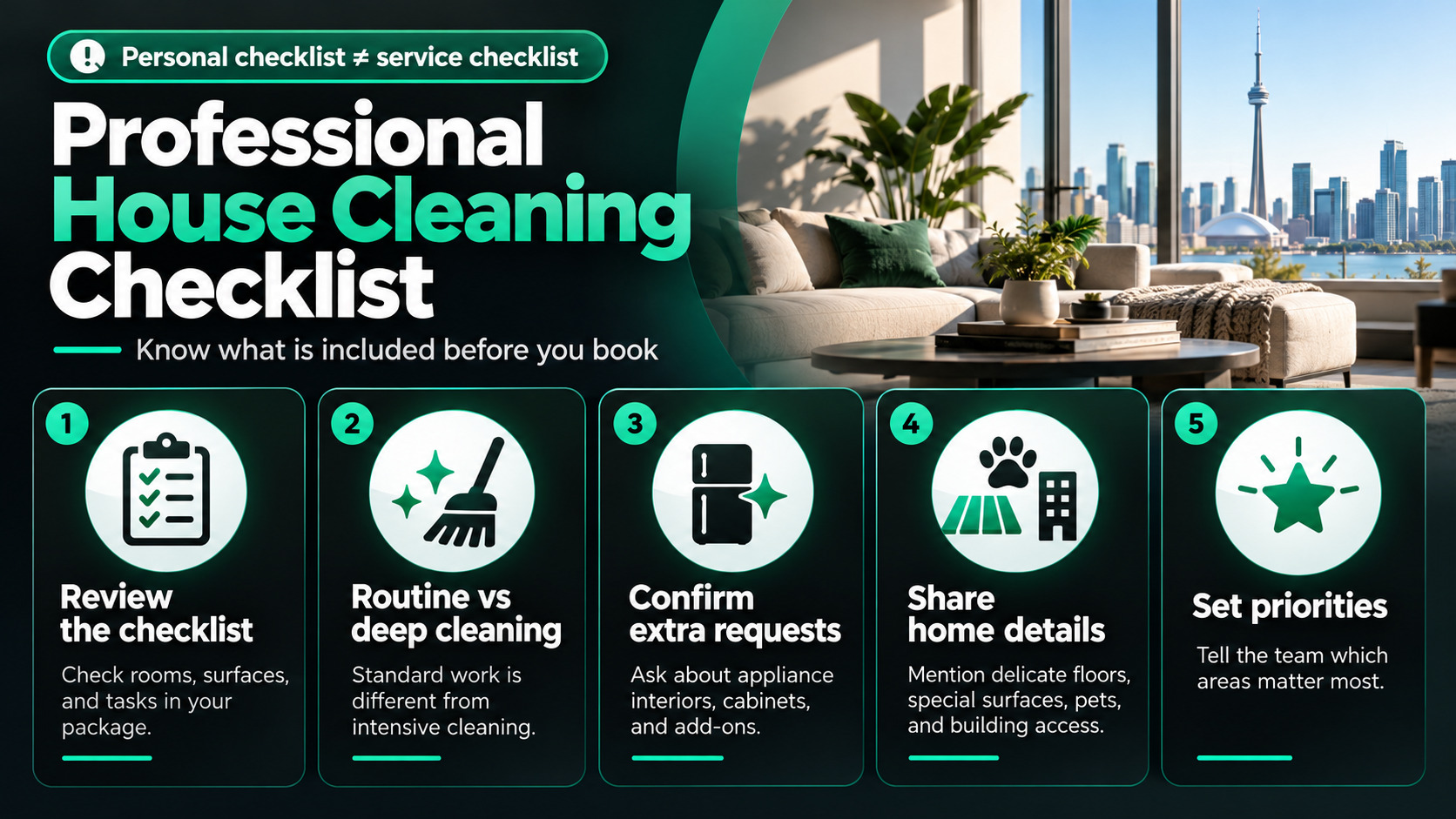
A personal household checklist and a professional cleaning company’s service checklist are not interchangeable. Your personal house cleaning checklist in Toronto may include every task you want completed over time, including appliance interiors, occasional deep cleaning, and seasonal chores. A professional cleaning checklist describes what a provider agrees to complete under a particular service.
Before arranging cleaning assistance, consider these five steps:
- Review the published service checklist. Identify the rooms, surfaces, and tasks included in the selected package.
- Separate routine work from intensive cleaning. Some tasks may be included in standard housekeeping, while others require a deeper or specialized service.
- Confirm additional requests. Explain whether you need appliance interiors, cabinet cleaning, or other tasks outside the usual scope.
- Communicate surface and access requirements. Mention delicate flooring, specialty finishes, pets, and relevant building procedures.
- Agree on cleaning priorities. Make sure the provider understands which areas matter most and whether any additional work could affect the appointment.
Toronto Home Cleaners publishes an official professional cleaning checklist with different categories for Standard Cleaning, Refresh Cleaning, Premium Deep Cleaning, Move-In/Move-Out Cleaning, and renovation-related work. Use that information to understand the company’s published services, while keeping your broader household cleaning plan separate.
Frequently Asked Questions About House Cleaning Checklists
What should I check after hiring a professional house cleaner?
Compare the completed work with the tasks agreed upon before the appointment. Inspect accessible areas included in the service and identify any specific omissions. If you notice a problem, contact the provider promptly and ask about its current issue-resolution process.
Can I ask professional cleaners to follow my own customized checklist?
You can share a customized checklist with a cleaning company, but the provider must confirm which tasks fit its services, available appointment time, and agreed price. Additional requests may require a different package or an updated quotation.
How can I create a printable house cleaning checklist?
Copy the room-by-room tasks and cleaning schedule from this guide into a document or spreadsheet. Add checkboxes, organize tasks by frequency, and remove items that do not apply to your property. You can then print the list or save it digitally.
What should I do if a cleaning product is unsuitable for my countertop or flooring?
Stop using the product and consult the surface manufacturer’s care instructions. Do not mix it with other chemicals. If the surface is already damaged or you are unsure how to proceed, seek guidance from the manufacturer or an appropriate professional.
Final Thoughts — Build a Cleaning Checklist That Fits Your Toronto Home
A practical house cleaning checklist in Toronto helps you organize household chores, maintain frequently used rooms, and decide when more detailed cleaning is needed. Start with the areas you use most, adapt your routine to your household’s needs, and review occasional cleaning tasks as conditions change. When arranging professional assistance, compare your personal cleaning priorities with the company’s actual service inclusions. Toronto Home Cleaners offers residential cleaning across Toronto and its listed GTA service areas. If you need support with routine housekeeping, explore its standard home cleaning services or call +1 437-475-0034 to discuss your cleaning requirements.